Introduction
RNA interference (RNAi) is a conserved gene regulatory mechanism found across all domains of life. It plays a central role in maintaining genome and transcriptome stability by regulating gene expression at nearly every stage—from transcription to translation. RNAi is essential for normal development, cell differentiation, and stress responses, and its dysregulation is implicated in diseases such as cancer and infertility.
At the core of RNAi are Argonaute (AGO) proteins, which serve as effectors by binding to small RNAs (sRNAs) and guiding them to complementary target transcripts. This interaction enables sequence-specific gene silencing through various mechanisms, including mRNA degradation, translational repression, and chromatin modification.
A detailed understanding of how AGO proteins interact with sRNAs is crucial for uncovering the regulatory logic of RNAi. It provides insight not only into fundamental biology but also into disease mechanisms and potential therapeutic applications.
Background
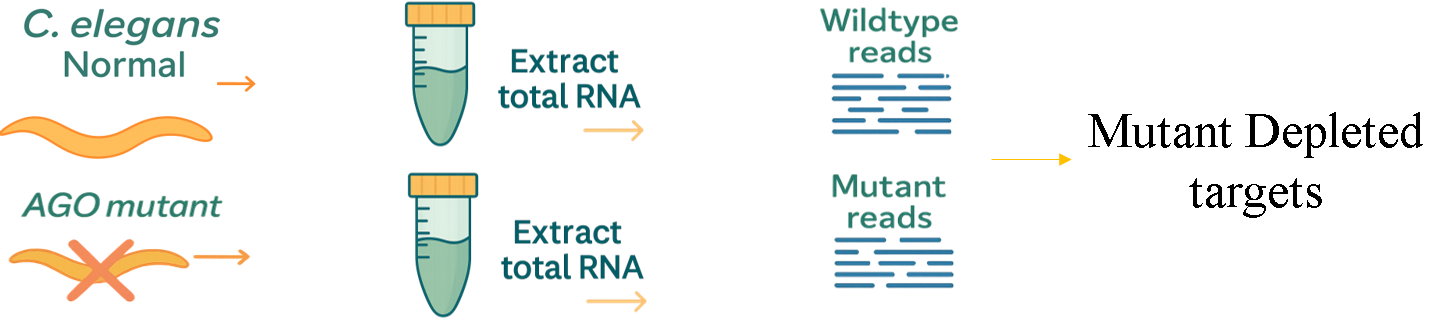
A recent study conducted by Seroussi et al. (2023) presents the most comprehensive analysis to date of all 19 Argonaute (AGO) proteins in Caenorhabditis elegans, unveiling their expression patterns, associated small RNAs (sRNAs), and biological functions across various developmental stages and stress conditions. By applying CRISPR-Cas9 genome editing to insert GFP::3xFLAG tags into endogenous AGO loci, the authors performed immunoprecipitation (IP) followed by high-throughput sequencing, enabling systematic identification of AGO-bound sRNAs and their regulatory targets in vivo.

Motivation
While this work provided a valuable resource for understanding the global landscape of AGO–sRNA interactions, it lacked transcript-level annotations and searchable access to target information. Readers were unable to explore individual genes or identify AGO-specific regulatory targets in detail. Our study addresses this gap by analyzing the raw sequencing data to map AGO-associated sRNAs to target transcripts and to develop an interactive database platform that enables transcript-level exploration.
Contributions
- 🔸 Integrated public AGO IP and mutant datasets for systematic transcript-level analysis
- 🔸 Developed two complementary target identification strategies (IP Enriched & Mutant Depleted)
- 🔸 Created a user-friendly web platform for querying AGO targets in C. elegans
Search Page

This allows quick access to detailed information and potential AGO targeting data for the gene or transcript of interest.


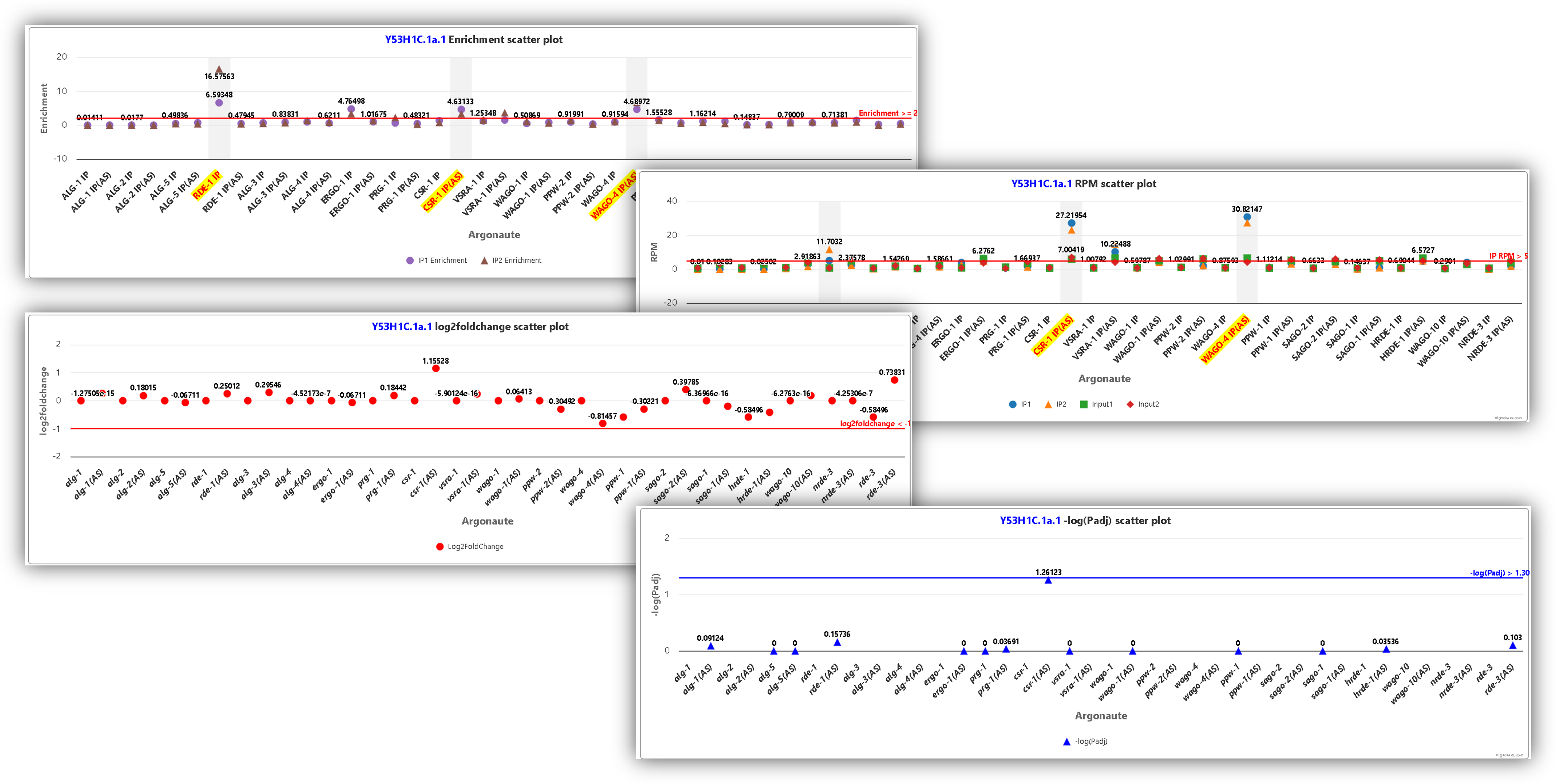
These include:

This allows users to visually compare the abundance and enrichment of small RNAs across different transcript regions and AGO datasets, helping to identify potential AGO target hotspots.
Target & Browse Page
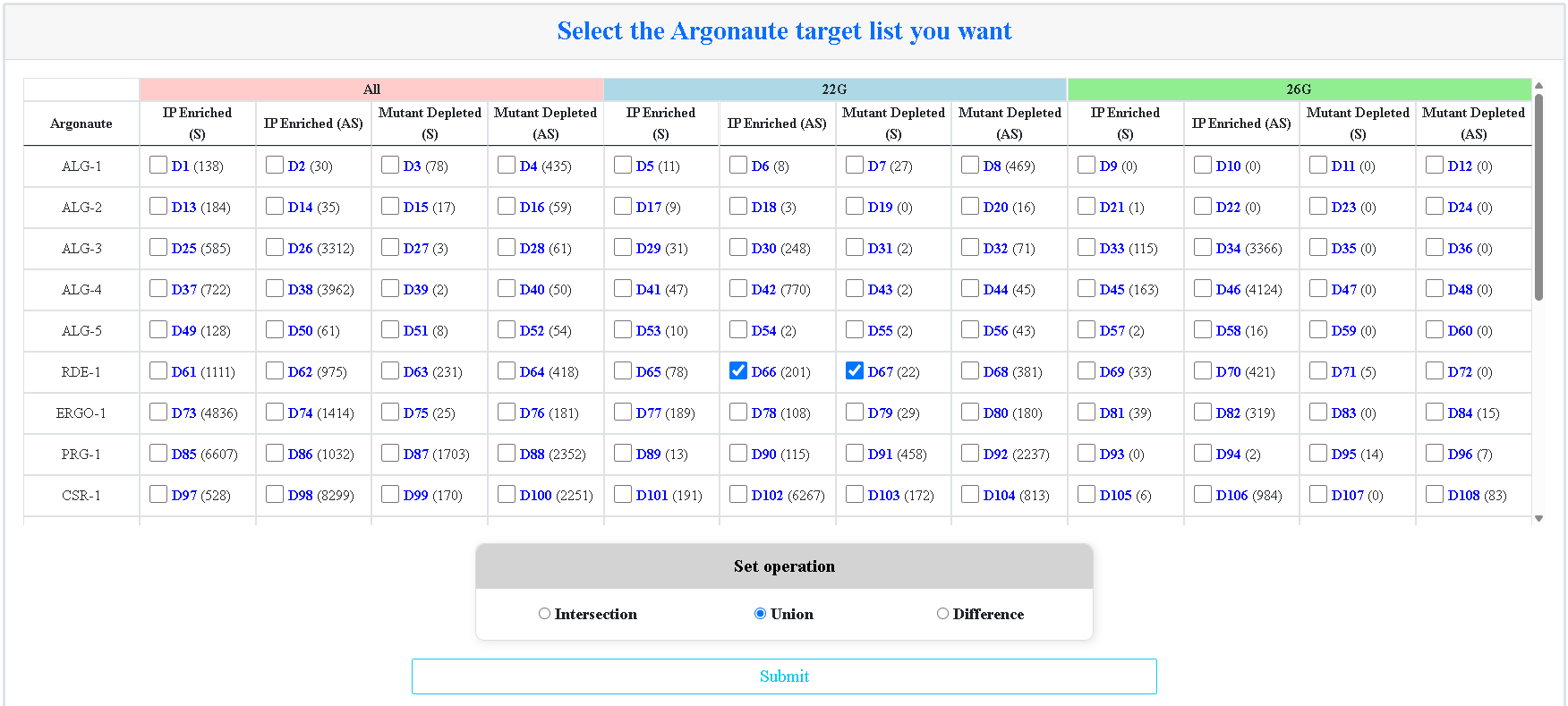
Users can select one or more target lists and perform set operations such as intersection or union to compare AGO targeting patterns under different conditions.

This enables rapid identification of transcripts with the strongest AGO association under defined conditions.

Users can:
Reference Transcriptome
The Caenorhabditis elegans transcriptome reference used in this study was obtained from the official WormBase database, a widely recognized and authoritative resource maintained by the international C. elegans research community. To ensure data consistency and completeness, the WormBase release WS293 was selected, which provides the latest gene annotations and transcript models suitable for transcriptome and expression analyses.
In this study, the following four transcriptome FASTA files were used:
c_elegans.PRJNA13758.WS293.mRNA_transcripts.fac_elegans.PRJNA13758.WS293.ncRNA_transcripts.fac_elegans.PRJNA13758.WS293.transposon_transcripts.fac_elegans.PRJNA13758.WS293.pseudogenic_transcripts.fa
These datasets collectively contain a comprehensive range of transcript types, including coding transcripts, ncRNA, miRNA, piRNA, tRNA, and others. After compiling and removing duplicated transcript entries, a total of 61,034 unique transcripts were retained for downstream analyses. These transcript types were used to build the Bowtie alignment reference (allowing up to two mismatches) for small RNA mapping.
| Transcript Type | Number |
|---|---|
| coding_transcript | 32,017 |
| ncRNA | 7,779 |
| circular_ncRNA | 724 |
| tRNA | 634 |
| miRNA | 458 |
| snoRNA | 346 |
| lincRNA | 202 |
| snRNA | 129 |
| asRNA | 104 |
| rRNA | 22 |
| miRNA_primary_transcript | 10 |
| scRNA | 1 |
| nc_primary_transcript | 658 |
| pre_miRNA | 262 |
| transposable_element_ncRNA | 2 |
| piRNA | 15,363 |
| Transposon-mRNA | 343 |
| Transposon-pseudogenic_transcript | 22 |
| Transposon-non-coding_transcript | 2 |
| pseudogenic_transcript | 1,958 |
| Total | 61,036 |
| Unique transcripts (after removing duplicates) | 61,034 |
Data Analysis
Small RNA sequencing datasets related to Argonaute (AGO) proteins in Caenorhabditis elegans were obtained from public databases including the Gene Expression Omnibus (GEO) and the Sequence Read Archive (SRA). The datasets included both immunoprecipitation (IP) samples and AGO mutant samples, providing complementary perspectives for identifying target transcripts.
Raw sequencing reads were processed with Cutadapt to remove adapter sequences, and reads that met length thresholds were retained. The cleaned reads were aligned to the C. elegans reference transcriptome (WS293) using Bowtie with a maximum of two mismatches allowed.
Read counts of small RNAs mapped to each annotated transcript were quantified. For immunoprecipitation (IP) datasets, the sRNA abundance per transcript was normalized to Reads Per Million (RPM), and enrichment ratios were calculated relative to the corresponding input samples. Transcripts were considered AGO-associated targets when they met both criteria: IP RPM ≥ 5 and IP enrichment ≥ 2.
For AGO mutant datasets, differential expression analysis between mutant and wildtype samples was performed using DESeq2, and transcripts showing log₂ fold change < –1 and adjusted p-value (padj) < 0.05 were defined as mutant depleted targets.